Why Do Iron Shafts Have Steps? The Secret to Feel Lies Right Here!

If you have ever examined your iron shafts closely, you must have noticed an interesting phenomenon: some steel shafts look like a single, seamless piece, while others feature a series of "steps" that resemble bamboo.
Don't underestimate them! These "steps" are not merely for aesthetic design; they determine your ball flight, feel, and consistency, and serve as the core craftsmanship in tuning steel shafts for performance. So, what exactly is the difference between these two types of shafts during a swing?
Today, we will use KBS steel shafts as an example to unveil the mystery behind "stepped" and "stepless" designs.
Why do shafts have "steps," and how are they made?
Steel shafts originated as rolls of steel, with machines curling the flattened steel sheets into tubes. Although "stepped" and "stepless" shafts both look like metal tubes, their manufacturing processes and the machinery used are completely different!
Stepped Shafts
To give each shaft a unique "personality," after being rolled into a tube, it must undergo reduction processing using various molds of different sizes, ultimately creating distinct steps along the shaft. The balance point and kick point of the club are adjusted by varying the diameter, length, and quantity of these steps.
Generally speaking, stepped shafts feel more flexible during a swing, offering a "snappier" feedback compared to stepless shafts. When designing these shafts, engineers can fine-tune the sections to provide a wider variety of characteristics.
Stepless Shafts:
Stepless shafts appear as a single, seamless piece with a dense structure. They are manufactured using a compression-drawing technique, which alters functionality and kick points by varying the taper length.
Because there are no variations in step diameter to affect energy transfer, the feedback is direct, resulting in a very solid feel at impact.
These two designs represent two different methods of energy transfer; neither is inherently superior to the other—they simply provide entirely different feels and ball flight control.
Stepped vs. Stepless: What is the difference in actual play?

After reading the previous section, do you have a better understanding of your iron shafts? You might now be wondering, how do they differ during a swing?
Let’s delve deeper into their actual performance to help you precisely identify the shaft that suits you best.
Stepped Shafts: The Art of Flex and Rhythm
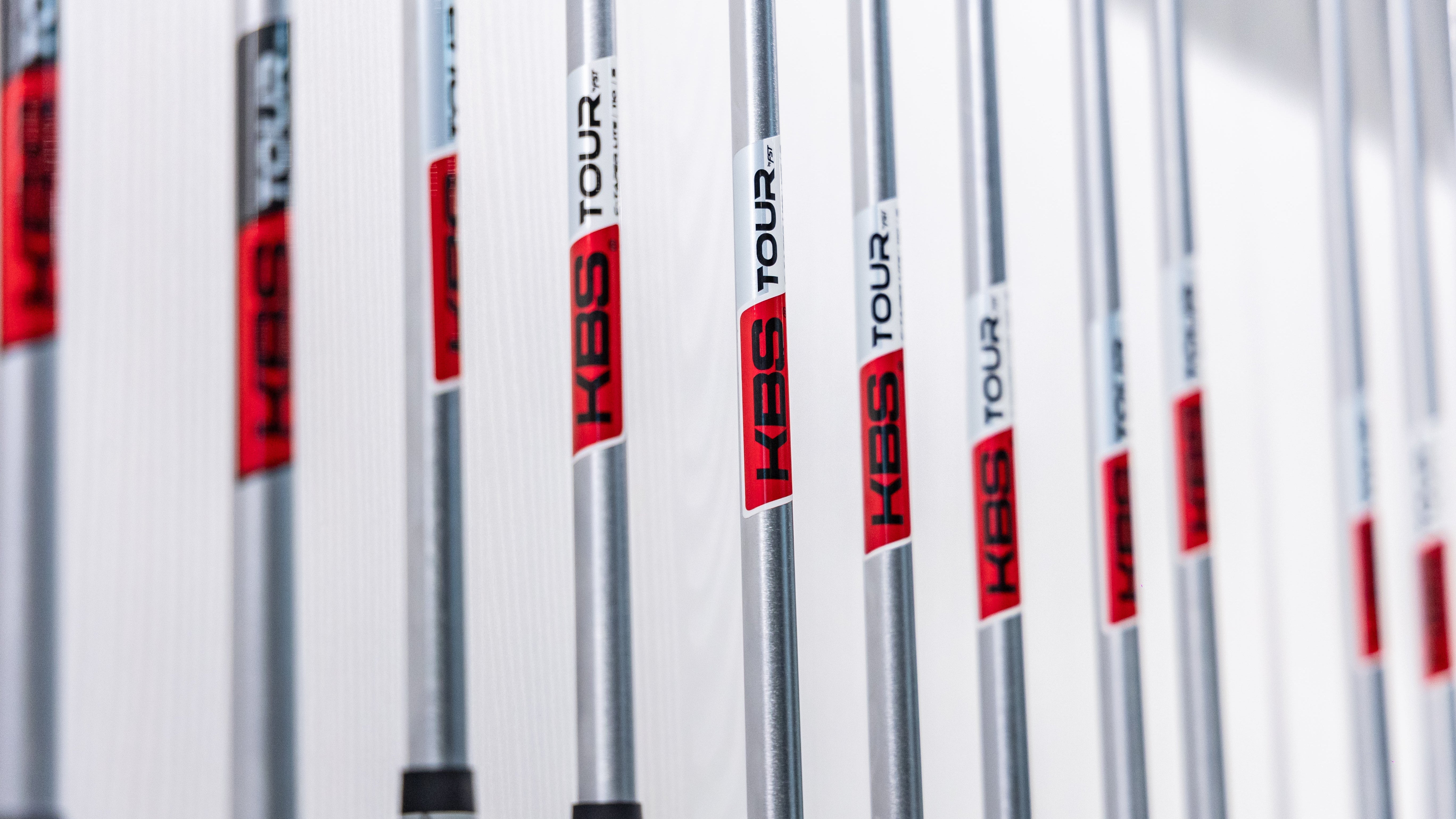
Take the classic KBS Tour as an example; this stepped design contributes to shaft flexibility during the swing. The feel is generally "softer" or "smoother," capable of absorbing more vibration, making it perfect for the stability and comfort sought by most golfers.
-
Fluid Feedback: The stepped design provides a layered sensation during energy transfer, allowing you to clearly feel the shaft absorbing and releasing energy throughout the swing.
-
Excellent Launch Height: For the average golfer, stepped shafts are easier to feel "springy," which helps get the ball airborne and creates an ideal landing angle for stopping the ball on the green.
Stepless Shafts: The Symbol of Power and Stability
Representative models for stepless shafts, such as the KBS C-Taper, generally feature a more uniform distribution of stiffness. The feedback is direct and firm, making them suitable for golfers who need precise control over shot shaping and who prioritize accuracy. Some stepless designs feature an overall tapered extension, which can slightly reduce vibration.
-
Extremely High Torsional Stiffness: Due to the continuous structure, it effectively reduces subtle tremors at the moment of impact, making power transfer very direct and crisp.
-
Low Launch and Low Spin: Stepless shafts are generally better at suppressing high launch and reducing backspin, allowing the ball to maintain excellent penetration even in strong winds.
How do I know which design is right for me?
Of course, in addition to the well-known TOUR and C-Taper series, KBS offers a variety of other shafts, including graphite iron and wood shafts. To find your ideal shaft, we still recommend booking a professional custom Fitting service to have a technician assist you.
However, if you are not yet planning a fitting, it is recommended that you examine your typical swing tendencies before making a purchase to see which shaft type suits you best:
If the following describes you, a "stepped shaft" is better suited for you:
-
Smooth Swing Rhythm: You aren't someone who swings with maximum effort, but rather rely on tempo to drive the club; you need the "elasticity" of the shaft to help increase your ball speed.
-
Troubled by Low Ball Flight: If your irons always result in "flat" shots that can't hold the green, a stepped design can help launch the ball higher.
-
Value "Feel": You prefer that soft-yet-springy, feedback-rich sensation at the moment of impact.
For golfers who prefer a soft feel, can sense the release of the shaft, and prefer less vibration, we recommend choosing a "stepped" shaft.
If the following describes you, a "stepless shaft" is better suited for you:

-
Powerful Swing with Fast Tempo: If you find that stepped shafts can't keep up with your speed on the downswing, the support provided by a stepless shaft will give you more confidence.
-
Excessive Launch and Spin: If your ball flies too high, making it susceptible to wind and leaving little roll upon landing, a stepless design can help you regain penetration.
-
Pursuit of "Direct" Feedback: You dislike unnecessary vibration and want the shaft to provide stiff, precise feedback.
For golfers who prefer direct feedback, pursue a firm and controlled feel, and desire a stable ball flight, we recommend choosing a "stepless" shaft.
Conclusion
In the world of golf clubs, there is no absolute good or bad, only what is right for you. The KBS Tour showcases the elasticity and elegance of traditional stepped craftsmanship, while the KBS C-Taper embodies the composure and stability of modern stepless technology.
The next time you are selecting irons, besides focusing on stiffness and weight, try taking a close look at whether the shaft is stepped, and pay close attention to those subtle differences in feel during your test swings. You might be surprised to discover that the "indescribable feeling" you were experiencing was actually caused by the difference in how the shaft was manufactured!
The shaft brand used by nearly 1/3 of professional players globally
Book a Fitting now and let KBS craft a club that is unique just for you!
Further Reading
Why is the LITE series needed? Sometimes they can actually help you perform better!
Stop being fooled by stiffness labels; they aren't as important as you think!
— "Why shouldn't you only look at stiffness? Let us teach you about the 'invisible traps' of golf shaft stiffness labels!"