Why You Shouldn't Just Look at Flex: Learning to Understand the "Invisible Traps" of Golf Shaft Flex Labels!

"I've always played S-flex, so why is this shaft so hard for me to handle?" This is a common frustration for many golfers after bringing a new, highly anticipated club home. You might have hit a few balls at the driving range, felt good about it, and excitedly taken it home, only to discover on the course that your swing tempo is completely off.
Many people are accustomed to treating the R (Regular) or S (Stiff) labels on a shaft as absolute physical standards, using them as the primary basis for purchasing shafts from various brands. However, these letters are more like "relative markers" for each brand's shafts rather than precise, standardized data.
In the following article, we will break down the invisible traps of shaft flex labeling and teach you how to find the perfect shaft for you amidst a dizzying array of specifications.
Don't Let Letters Box You In! Understanding the Meaning of Shaft Flex Labels
I wonder if you have had the same experience as mentioned at the beginning? Honestly, it’s not your fault, nor is it a case of brands or retailers intentionally deceiving consumers; it’s all just a beautiful misunderstanding.

Why is flex labeled?
To clear up this misunderstanding, we must first understand why shafts are labeled with flex.
The essence of flex is describing the overall "bendability" of the shaft. The letters R, S, and X are intended to provide consumers with a preliminary reference when purchasing shafts.
Common labels are as follows (in order of flex, L is the softest and X is the stiffest):
-
L (Lady)
-
A (Senior)
-
R (Regular)
-
S (Stiff)
-
X (Extra Stiff)
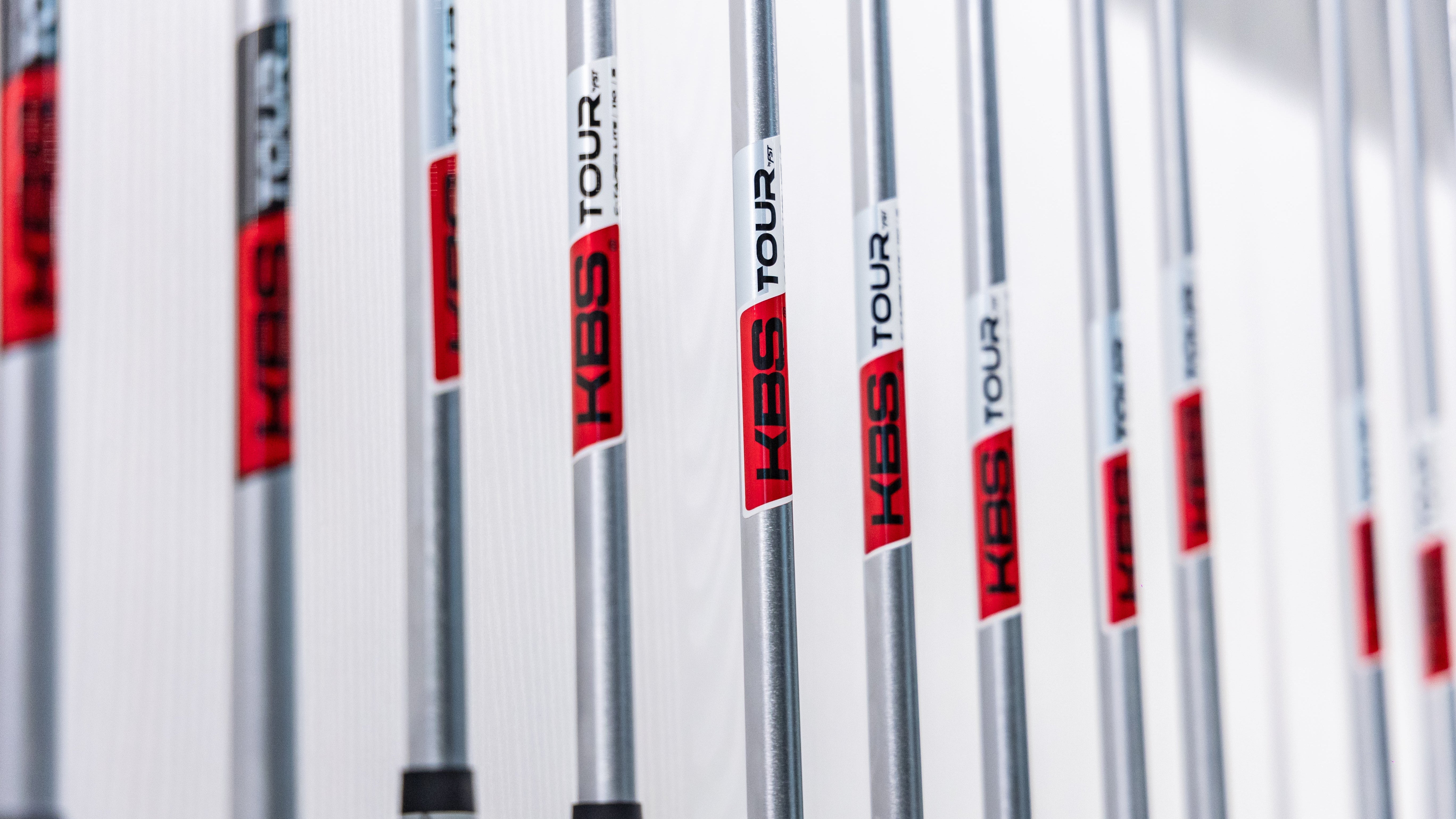
In addition to these common labels, each brand will further subdivide flex ranges based on different products and series using various English letters, numbers, or symbols. For example, the various KBS shaft series include labels like R2 or XX.
The purpose of these labels is primarily to allow consumers to "quickly categorize" and prioritize trial-hitting shafts that are relatively suitable for them, reducing the time spent testing every single option.
But here is the main point—this is not an internationally unified standard.
The Logic of Flex Labeling: "Relative Coordinates" for the Same Shaft Model
We must understand a core concept: there is currently no generally accepted "physical standard for flex" in the golf industry.
The R, S, and X labels used by each brand are actually a "relative ranking" of the flex within that specific series of shafts.
It’s like buying clothes: if you buy a shirt from Brand A, a Medium might fit perfectly, but at Brand B, you might need a Large. And if Brand A has both Asian and American sizing, even if they are both marked as Medium, you might still feel the American Medium is too loose.
The Trap of Flex Labeling: A "Spec War" Between Different Models

Generally speaking, within the same series of shafts, a heavier weight usually equates to a stiffer flex. This is because, under the same length, a heavier shaft requires more material, increasing the wall thickness and consequently the stiffness. However, in recent years, with technological advancements, carbon fiber shafts can be fine-tuned internally to change the stiffness without increasing the weight.
If you have tested the KBS C-Taper series in R-flex, you might be surprised to find that its perceived stiffness (as well as its frequency data) is actually stiffer than many other KBS iron shafts labeled as S-flex. This is because each shaft serves different functional purposes and caters to different user groups, so their designs inherently differ.
Furthermore, factors like the shaft's wall thickness, profile design, and material all influence its overall stiffness. Looking solely at a single letter often fails to reflect the true "personality" of the shaft.
Self-Reflection: How to Find the Right Shaft for Yourself?
Confirming the Full Specifications of Your Current Clubs
Many people receive their new clubs and head straight to the course without ever closely reviewing the specifications.
There is nothing wrong with that, but when we hit a plateau, we need to go back and examine the issue. If you are looking to take your game to the next level, I suggest auditing your current gear alongside your ongoing practice.

Please first confirm:
-
Shaft weight (e.g., 95g, 105g, 120g)
-
Material (Steel / Carbon Fiber / Composite)
-
Brand and Model
-
Flex Label
Once you understand your shaft data, we can combine your swing feel and actual performance with your personal needs to determine how to select your next shaft.
If you are still unsure how to make adjustments, you can also read the Shaft Purchasing Guide series of articles to help you quickly assess the direction for shaft adjustment based on your ball flight and hitting performance.
Establishing a Comparison Benchmark: Let "Data" and "Feel" Do the Talking
Every shaft has its own design DNA, such as high-launch or low-spin performance models.
Furthermore, every individual's swing style and physical condition will impact their shot outcome differently. Therefore, rather than relying solely on someone else's experience, it is better to visit a professional club workshop or brand store to test them out yourself. Experience the subjective differences and objective data changes that different clubs provide before evaluating which shaft is right for you.
Ultimately, the correct process for purchasing clubs should be: first, find the shaft model series suited to your swing characteristics, and finally, choose the weight and flex within that series that feels most comfortable to you.
How Do You Find Your Destiny Shaft?
That said, by the time we finally find our "destiny shaft" through trial and error, we may have already swapped clubs many times and wasted a lot of money.
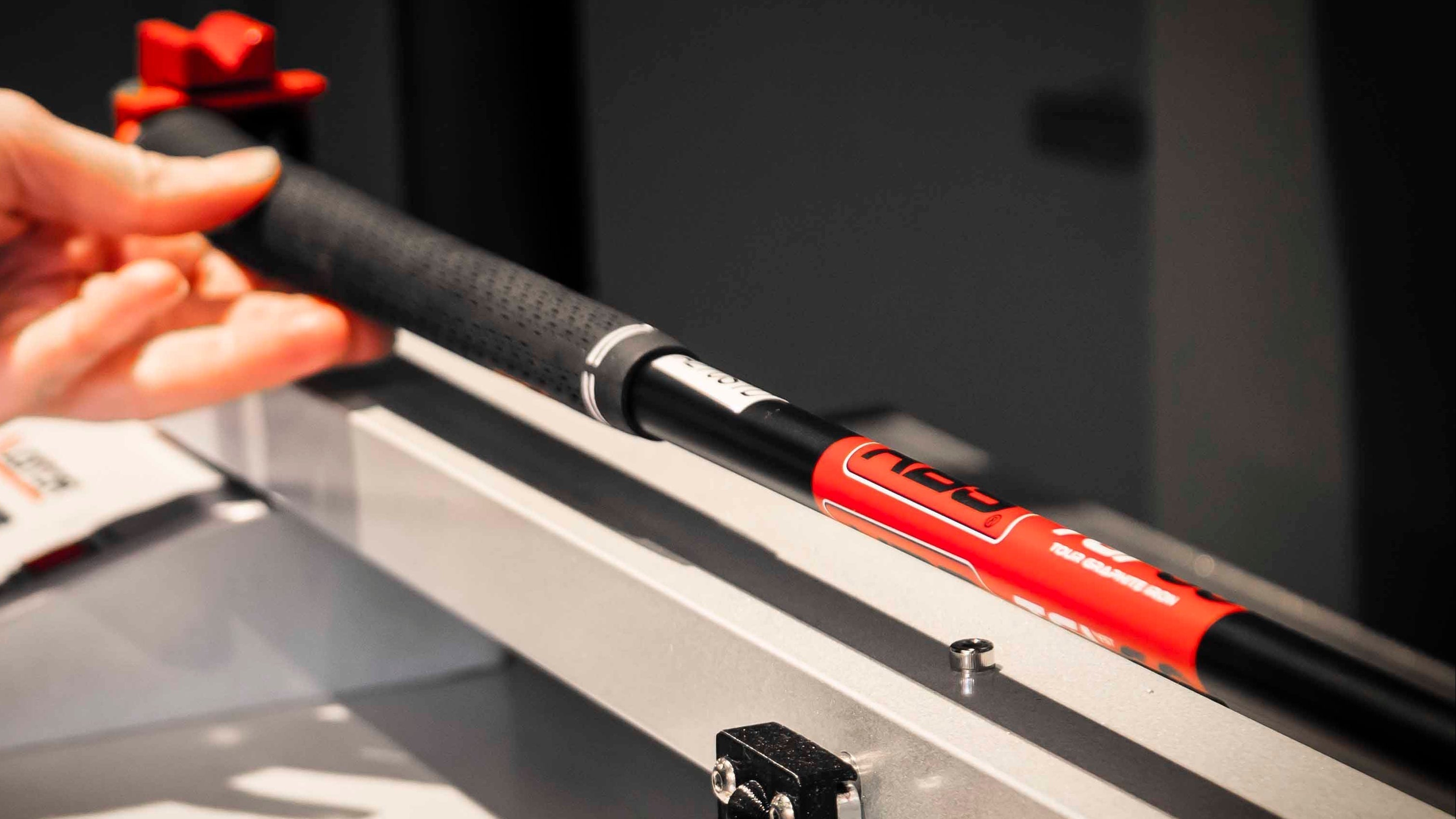
If you want to stop the expensive cycle of "blind testing," undergoing a professional fitting is undoubtedly the most efficient approach. A technician can use high-end equipment like GCQuad or Trackman to deeply analyze your overall performance data and identify your "release timing," helping you determine the ideal next shaft for you.
Furthermore, when your physical condition changes and you feel the need to adjust your equipment, be sure to schedule a full fitting again.
You may not feel much different, but a re-test might reveal significant changes in the data. At that point, the technician might tell you: Even though you used to play R-flex, your change in power delivery means this 105g S-flex shaft can now help you gain 10 yards while staying straighter.
Don't assume you will only ever have one "destiny shaft." Beyond changes in your physical condition, many tour pros adjust their equipment based on course conditions and weather, too!

Conclusion
By now, do you have a clearer understanding of the meaning behind shaft flex labels? Remember these tips, and you won't fall into the same traps when picking your next shaft.
Remember, the most expensive shaft isn't necessarily the best; the one that lets you play easily and happily is the perfect match. Don't forget to periodically review your ball-striking status and adjust accordingly to ensure every swing is more stable, confident, and reflective of your own rhythm and style on the course.
The shaft brand of choice for nearly 1/3 of professional players worldwide
Schedule your Fitting now and let KBS craft a one-of-a-kind club just for you!
Further Reading
Still not sure how much a Fitting can actually help? Then you must check out this article first!
── "The Fitting Process Revealed: A Complete 7-Step Analysis of Professional Club Fitting"
Are women's clubs not actually for women!? A 3-minute guide to understanding these marketing terms!
── "What are Women's Clubs? How are they different from regular clubs?!"